Treatment

Endodontics

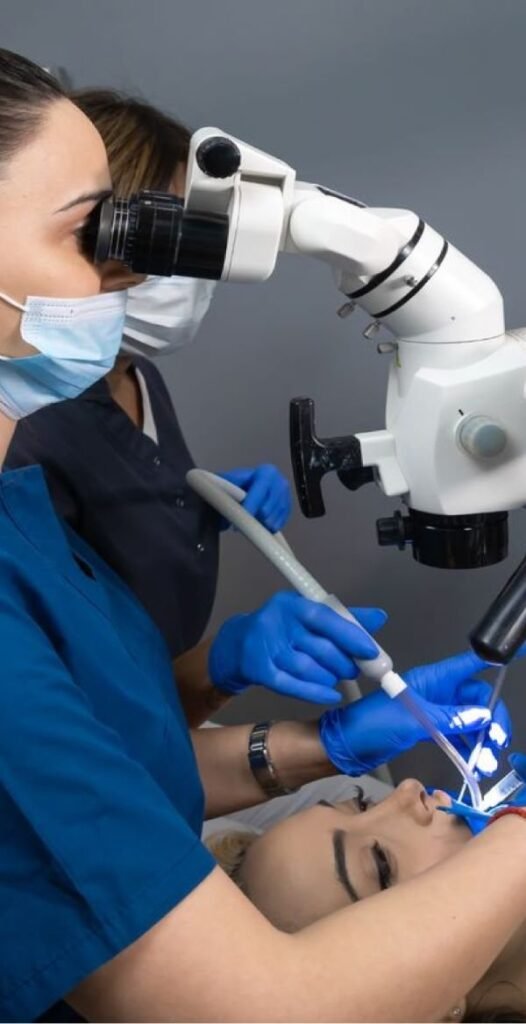
Saving the tooth, under the microscope.

Root canal treatment performed under the dental microscope to remove infection and keep your natural tooth. Precise, calm and usually completed in one or two visits.

Microscope-assisted dental hygiene treatment

Time in treatment

Usually 1–2 visits

How long it lasts

A well-treated, well-restored tooth can last a lifetime

Where

EDS Pejë · EDS Prishtinë

About the treatment

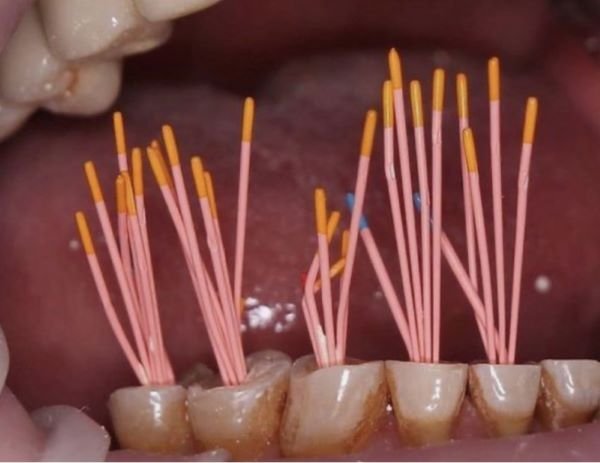
Endodontics treats the inside of the tooth – the pulp and the root canals. When the pulp is inflamed or infected, root canal treatment removes it, cleans and shapes the canals, and seals them, so the tooth can be kept instead of extracted.

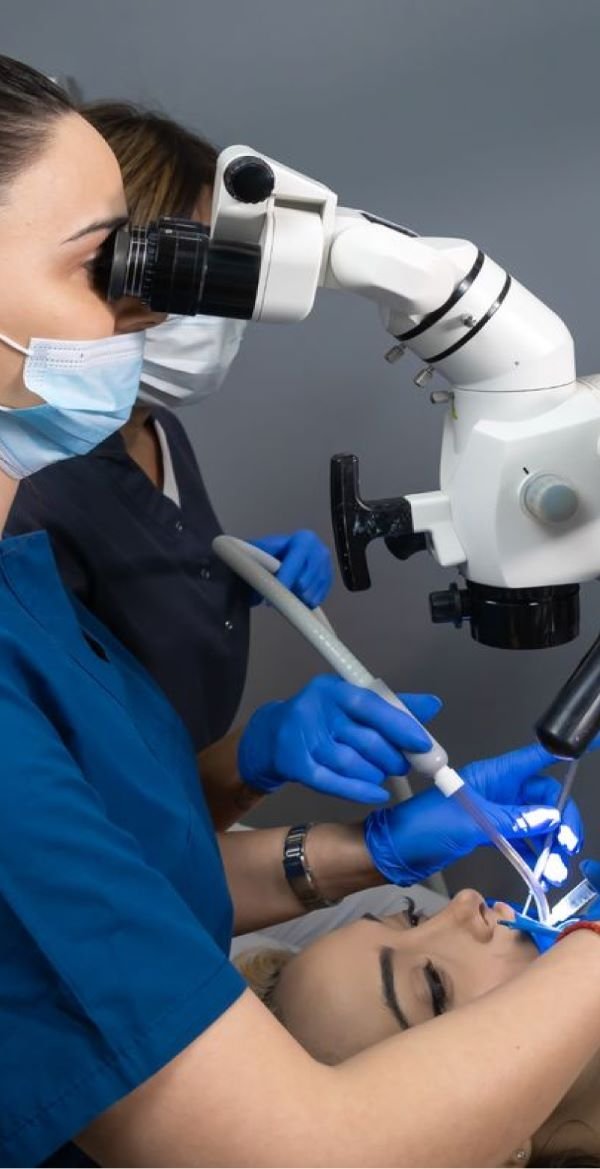
At EDS endodontic treatment is carried out under the dental microscope. Magnification and light let us find and clean every canal, see fine cracks and work with less removal of healthy tooth structure.

A treated tooth then needs a strong restoration – often an onlay or a crown – to protect it for the long term. We plan that restoration from the start.
Who it is for

  • Lingering pain with hot or cold, or pain when biting
  • A tooth with a deep cavity, crack or abscess
  • A previous root canal that has failed and needs retreatment

What is included

  • Treatment under the dental microscope
  • Digital X-rays and 3D CBCT when needed
  • Rubber-dam isolation for a clean, protected field
  • Retreatment of previous root canals

The process

How it works

Every step is explained before we begin, with a written plan and costs you can take home.

  1. Diagnosis – examination, tests and X-rays to confirm what the tooth needs.
  2. Anaesthesia and isolation – the tooth is numbed and isolated with a rubber dam.
  3. Cleaning and shaping – the canals are cleaned and disinfected under the microscope.
  4. Sealing – the canals are filled and sealed.
  5. Restoration – the tooth is rebuilt and protected with a filling, onlay or crown.

Questions

Something we have not answered? Ask us – the first conversation is always without obligation.

Is a root canal painful?

With modern anaesthesia, treatment usually feels like a long filling. It is the infection that hurts – treatment relieves it.

Why not just remove the tooth?

Your own tooth is almost always the best option. Replacing it with an implant takes longer and costs more.

Why is a crown sometimes needed afterwards?

A treated tooth can be more brittle. A crown or onlay protects it from fracture.